Manipur, 3 May 2023 to October 2026
The Long Fuse
The case for how the Centre handled Manipur, and the work it still has to finish
On 3 September 2026 the state's Home Minister told the assembly that 306 people are dead and 49 missing. This piece argues for the government's record: that the roots are older than the BJP, that Delhi moved when it counted, that President's Rule worked, and that the hardest part of the job is still ahead. It argues one side, says where the other side has a point, and marks every number the sources disagree on.
- Theatre
- The Imphal valley and the hills around it
- Mostly on
- Churachandpur, Imphal, Kangpokpi and Jiribam
- Reading time
- 40 minutes
Three and a half years after the first fires, the state's own count says 306 people are dead and 49 are missing, 11 of the dead in uniform. About 58,000 people left their homes between May 2023 and March 2026. The Home Minister who read those figures out in the assembly added one sentence worth holding on to: the dead and missing include Meiteis, Kukis and Nagas. All three. I'll come back to why that matters.
My view is that the Modi government's record in Manipur is better than the version most of the national press tells, and that the usual version leaves out the decades that came first. This is an argument for that record. It isn't a neutral summary, and I'd be wary of anyone who handed you one, because Manipur doesn't have a neutral summary. What it does have is official figures, court records and a lot of reporting by outlets that have no love for this government, and those are the sources a skeptic has to take seriously, so those are the ones I lean on.
The map beside the text plays the whole story: 39 dated events from November 2022 to October 2026. Red marks are attacks and clashes, blue diamonds are things the state did, grey squares are court orders and politics. Press play, pick a chapter, or just scroll. Pins sit on the nearest town, not the exact spot, and the "dead on record" counter shows the latest official figure on each date. Those figures come from different offices, so they don't always add up neatly.
Act I A state that was never one place
Manipur is a bowl with a plate in the middle. The Imphal valley is about a tenth of the state's land and holds somewhere between 57 and 60 percent of its people, depending on which census table you read. The other nine-tenths is hills.
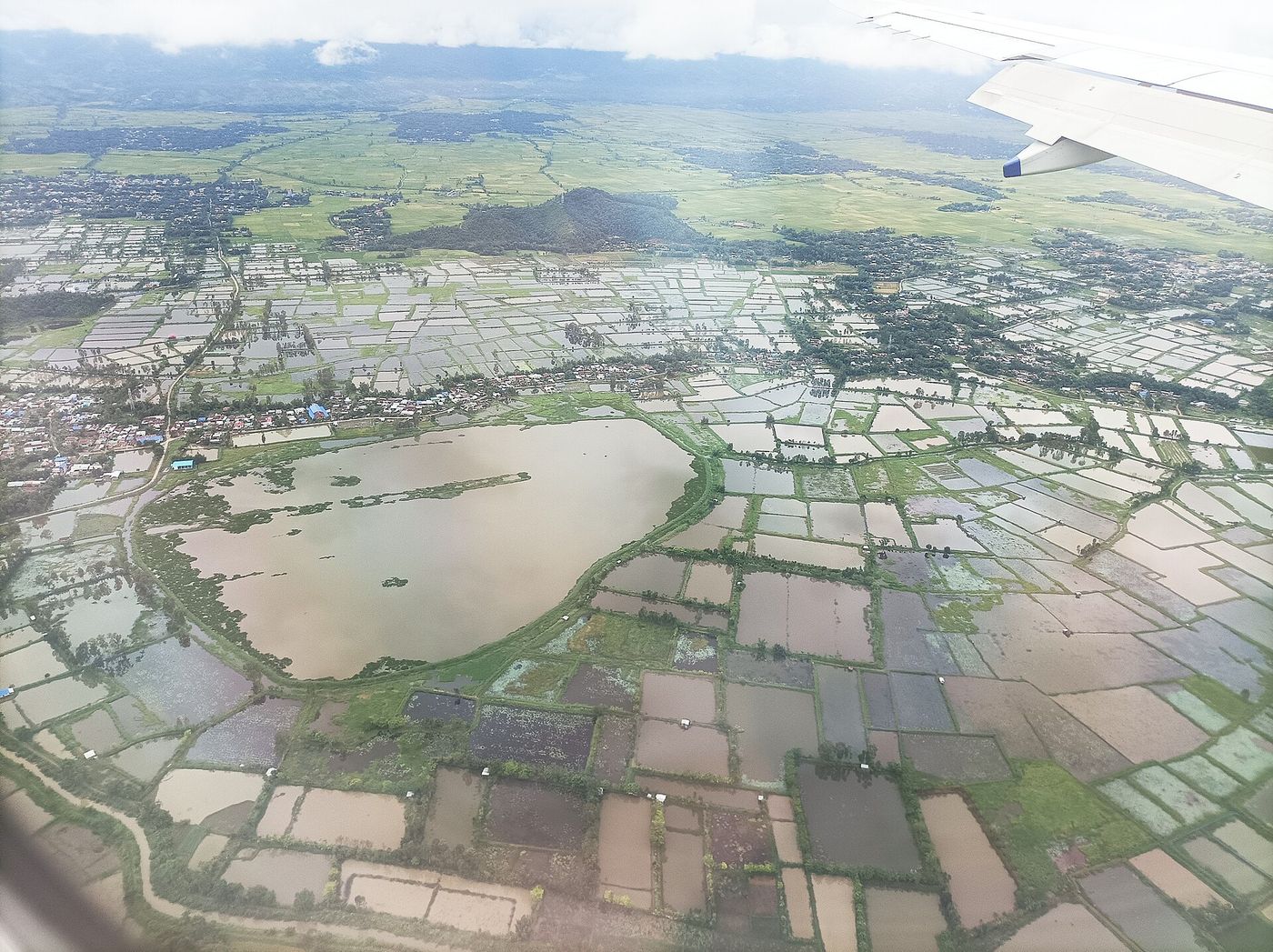
The valley is mostly Meitei, a little over half the state's population by the 2011 count, with a Muslim community, the Meitei Pangals, beside them. The hills belong to two large tribal families: the Nagas in the north and east, and the Kuki-Zo peoples in the south and west. More than thirty tribes are recognised between them. Scheduled Tribes make up about 41 percent of the state. The chief minister likes to say Manipur has 36 communities. The three that matter here are the Meitei, the Naga and the Kuki-Zo.
Nearly every argument in this conflict is an argument about that ratio. Meiteis can largely not buy land in the hills, which are protected for tribal communities, while tribal families can buy in the valley. Meiteis call that a one-way door. Tribal groups reply that the protection is the only reason hill land is still tribal land, and they point out that the valley elects 40 of the 60 members of the assembly. Both complaints are real. That is the whole difficulty.
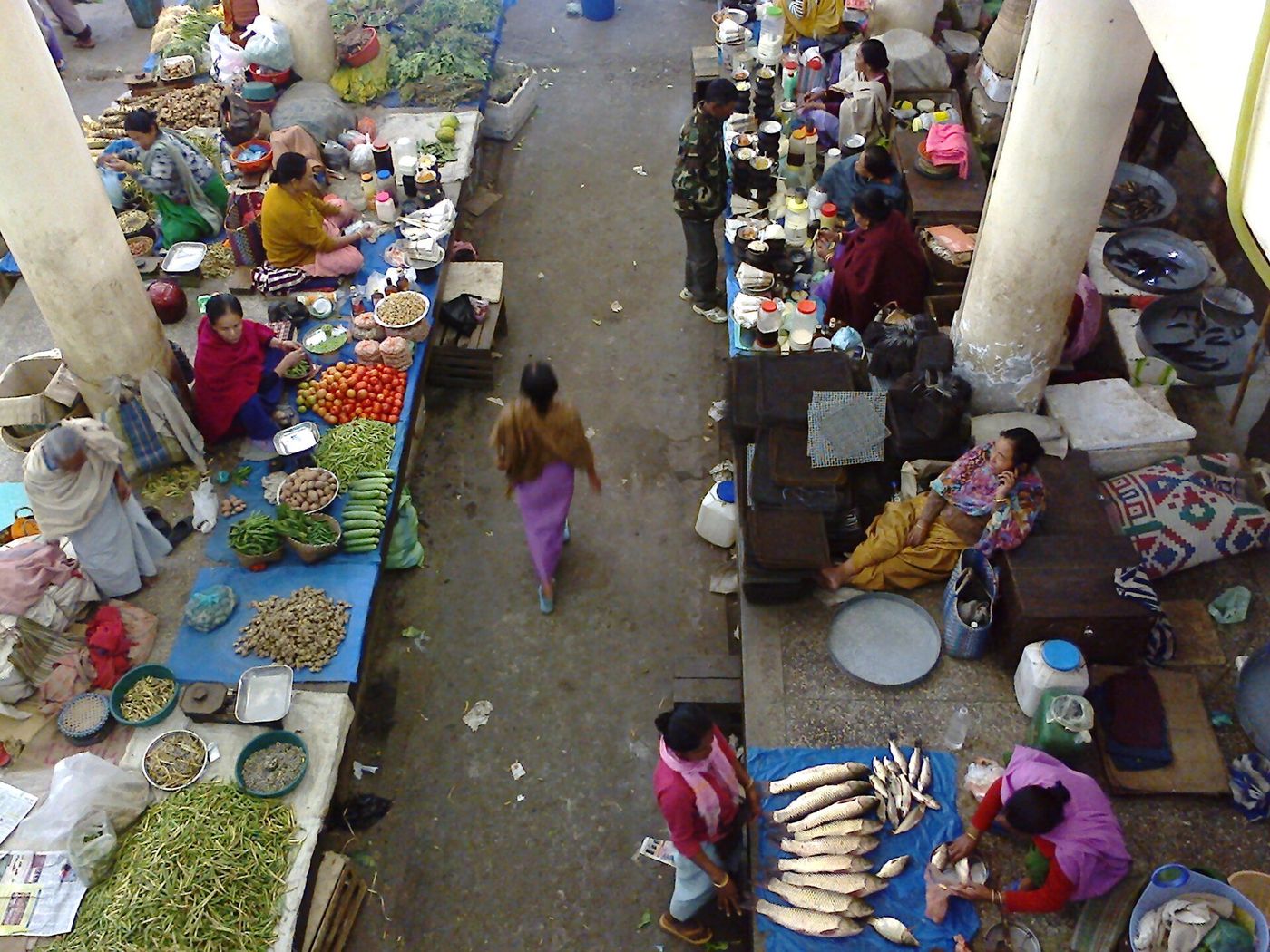
The old kingdom of Manipur became a British princely state, merged with India in 1949 and became a full state in 1972. Its border with Myanmar runs 398 km of the 1,643 km India shares with that country, and Kuki and Naga families live on both sides of it. Keep that in mind. It is why ending free movement there turns out to be such a fight.
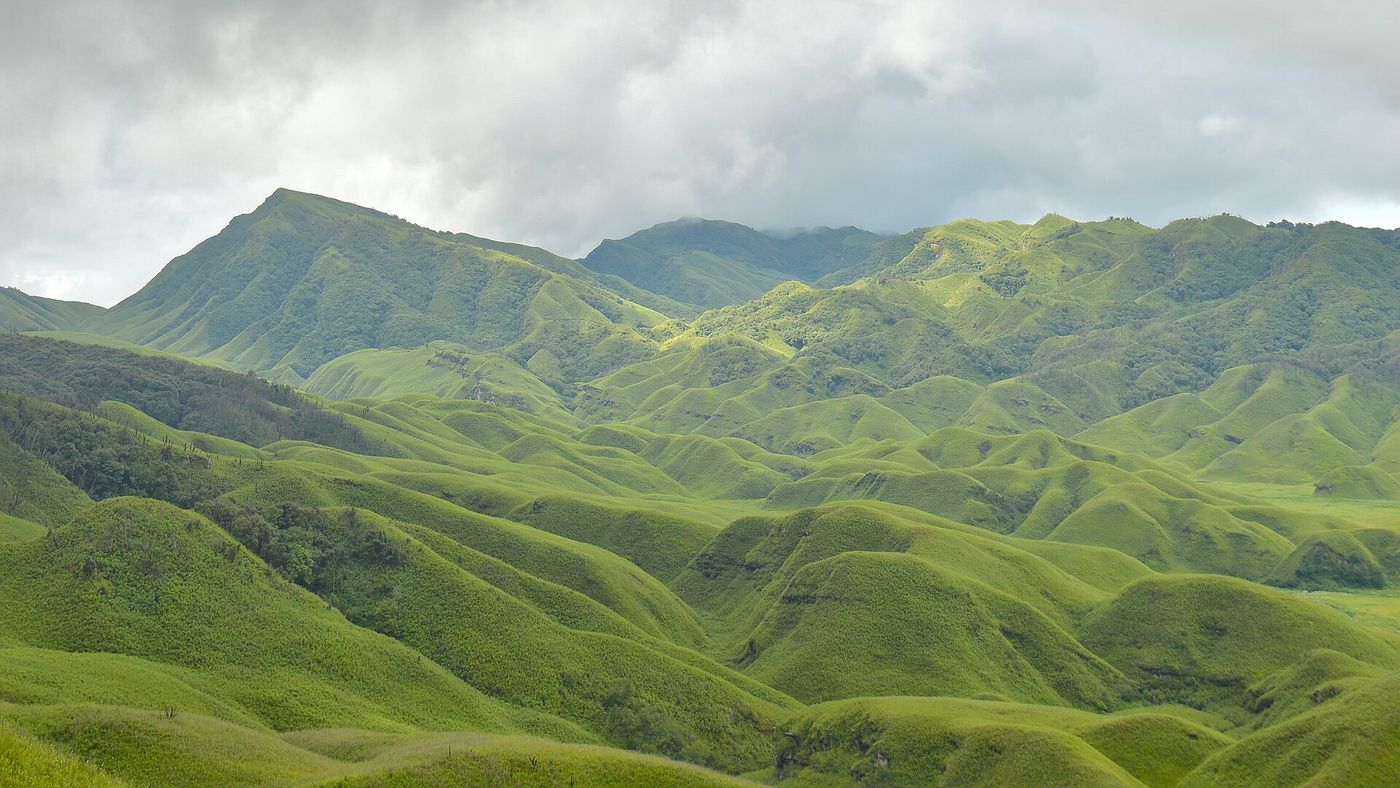
Act II Three maps of one state
Each of Manipur's three big communities is, in effect, arguing from a different map, and the maps don't fit together.
The Meitei map is the one on the cover of this page: the state as it stands, 16 districts, valley and hills together. Imphal is touchy about it. In June 2001 the capital burned its own assembly over two words in a ceasefire agreement, "without territorial limits", because they suggested the map might one day change. When Meitei groups say "territorial integrity", this is what they mean.
The Naga map is bigger. The NSCN-IM's idea of a Greater Nagaland, "Nagalim", takes in the Naga-inhabited hill districts of Manipur, Ukhrul, Senapati and Tamenglong among them. Kuki-claimed land overlaps it, which is why the Kuki-Naga war of 1992 to 1997 was above all a fight over land, over who pays land tax to whom, and over compensation for the Maphou Dam.
The Kuki-Zo map is smaller and sharper. In mid-May 2023, within days of the first fires, all ten Kuki-Zo members of the assembly asked for a separate administration. In October 2026 the Kuki-Zo Women's Forum asked for a Union Territory with its own legislature, and said in the same breath that its people do not want to leave India.
None of the three maps can be drawn without erasing part of another. That is why the conflict has outlasted every ceasefire, and it's the reason I think a central government that refuses to endorse any of them, however much that frustrates all three, is doing the correct and unglamorous thing.
Act III Older than the BJP
Before 2023 the usual way to describe Manipur was to list its crises by decade. The list is short enough to read in a minute, and it is worth reading before anyone tells you who broke the state.
- 1992 to 1997
The Kuki-Naga conflict. More than a thousand people died, around 1,300 by one estimate, and 50,000 to 100,000 were displaced. The Kuki Inpi, the Kuki apex body, counts more than 960 Kukis killed and 360 villages uprooted. On 13 September 1993, 88 Kukis were killed at Joupi. P.V. Narasimha Rao, a Congress prime minister, was in Delhi. Wikipedia has the summary.
- May 1993
The Pangal massacre. Between 100 and 130 Meitei Pangals, Muslims of the valley, were killed over two days by Meitei attackers, including about twenty women and children. The range is from Wikipedia's casualty table.
- 18 June 2001
A ceasefire extension with the NSCN-IM, signed in Bangkok, was worded "without territorial limits". Imphal read that as a threat to the state's map. Protesters burned the assembly building and security forces fired. Most sources say 18 people died. The Vajpayee government, a BJP-led one, backed down within weeks and kept the ceasefire to Nagaland. The CBI's closure report on the killings, filed almost two decades later, was criticised by human rights groups. Background.
- Apr to Jun 2010
The United Naga Council blockaded NH-39 and NH-53, Manipur's two lifelines, from early April until 18 June, over elections to the autonomous district councils. Ibobi Singh's Congress government was in Imphal. Parliamentary reply with the dates.
- 31 Aug 2015
The Ibobi Singh government passed three bills that hill groups called anti-tribal, among them the Protection of Manipur People Bill. In Churachandpur police fired on a crowd and nine people died. Their families refused to bury them, and the bodies were finally laid to rest in May 2017, after 632 days. The Wire and Newslaundry covered it at the time.
I'm not listing these to claim earlier governments were worse. They span a Congress prime minister, a BJP one and a Congress chief minister, and the cause underneath is the same each time: land, who counts as indigenous, and what the map of Manipur is allowed to look like. When a state erupts every decade or so under every kind of government, "the BJP did this" stops being an explanation. A better question is what each government did once it started.
What was new in 2023 was the hardware. By October of that year about 6,000 weapons and 600,000 rounds had reportedly been taken from police armouries, and only about a quarter had been recovered. Earlier crises ran on country guns and hunting rifles. This one ran, in part, on the state's own rifles. And in 2024 it got drones and long-range rockets. Both of those are failures I'll deal with directly later.
Act IV Six months to the first fire
The BJP came to power in Imphal in 2017 with 21 seats and two allies, and in 2022 it won 32 of 60 seats on its own with 37.8 percent of the vote. The Congress, which had won 28 in 2017, fell to five. Whatever else you say about Biren Singh's government, voters in the valley gave it a mandate twice.
The trouble that mattered began with a map. On 7 November 2022 the state set aside older orders that had kept 38 Churachandpur villages out of the proposed Churachandpur-Khoupum protected forest. They were now classed as "encroaching". In February 2023 a forest eviction drive began in Churachandpur, Kangpokpi and Tengnoupal. The government's case was that it was enforcing forest law in districts where poppy had eaten into reserved land. Biren Singh later said 877 sq km of forest cover had been lost in 34 years, mostly to poppy. Tribal groups read the same drive as a campaign against them. Both readings are held in good faith by people who live there.
One detail gets lost in the retelling. In March 2023 the state cabinet voted to pull out of the Suspension of Operations pact with three Kuki armed groups. The Centre did not back that. Whatever the Home Ministry got wrong later, in the spring of 2023 it was the party trying to keep the Kuki ceasefire alive while the state government wanted it ended.
Then a court moved. On 27 March 2023 a single judge of the Manipur High Court asked the state to send the Union a recommendation on Scheduled Tribe status for the Meitei, a demand that a Meitei committee had been pushing since 2012 and that the Union and state governments had turned down in 1982 and 2001. The judge did not declare Meiteis tribal. He asked the state to consider. Tribal groups still heard a threat. They feared that ST status for the largest community in the state would open the hill land and the tribal quotas to the people those protections were built to keep out.
The Supreme Court's position, which the High Court itself accepted in February 2024 when a single judge deleted the paragraph, is that only the Union can change the ST list. I think that point settles a lot of the argument. The spark was a judge's request, and the court later withdrew it.
In April the temperature rose. On 11 April three churches in Imphal's Tribal Colony were demolished as illegal structures on government land. On 28 April, with a visit from the chief minister due, a mob burned an open-air gym in Churachandpur. The district was put under Section 144 and the internet was cut for five days. Then came 3 May, when the All Tribal Students' Union called a "Tribal Solidarity March" that drew tens of thousands and Meitei groups answered with a counter-blockade at Torbung, on the Bishnupur-Churachandpur line.
Act V The first month
At Torbung, arson at Kangvai and in the Torbung Bangla villages started the night. About 80 people were hurt and at least three died there. By evening the violence was in Churachandpur town, then in Imphal, where a shoot-at-sight order went out the next day, and houses were burning on the Kangpokpi side. The Army and paramilitary forces were called in on 3 May itself, and the internet was cut; on 17 May the blackout was extended by another five days. Around 20,000 people were moved to safety within two days and 23,000 by the 6th.
By the state's tally on 14 May, eleven days in, 73 people were dead and 243 injured. 1,809 houses had been burned, 46,145 people evacuated and 26,358 were in 178 relief camps. The state had registered 385 criminal cases. For scale, the Kuki-Naga conflict of the 1990s took years to reach a thousand dead. This one reached the first hundred in about five weeks.
Then there is 4 May. Two Kuki women from Kangpokpi district were attacked by a mob, and their father and teenage brother were killed. The video did not surface until 19 July, and the arrests came only after it did. Seven men were arrested after it went viral, none before. If you want to find the government's worst week, this is it. A crime on that scale went eleven weeks without an arrest, and I'm not going to defend that. The things worth saying are what happened next: the Prime Minister spoke publicly about Manipur for the first time on 20 July, the CBI took over the case on 29 July, and on 1 August the Supreme Court called the situation an "absolute breakdown of constitutional machinery". In the days that followed it set up a panel of former judges, headed by Gita Mittal, to look at relief, rehabilitation and the cases.
The Centre's first big move came before all that. Home Minister Amit Shah flew into Imphal on 29 May and stayed four days. By the end he had announced a judicial commission, a CBI investigation into six FIRs on the conspiracy behind the violence, and an Inter-Agency Unified Command headed by Kuldip Singh, a former CRPF director general, to coordinate the Army, the Assam Rifles and the other forces. He also told the militants that weapons taken from police must be surrendered, and said compensation for the dead and for damaged property would go by direct bank transfer. Borderlens has the announcements and Business World the wrap-up.
The judicial commission came into being on 4 June, under Ajai Lamba, a former chief justice of the Gauhati High Court. By August a government-made inquiry and a court-made one were both running. Its deadline has been extended again and again; the latest extension I could find runs to 20 May 2026, and I could not find a published report. I count that as a failure, and I'll list it with the others.
Even with the forces on the ground, the first weeks were ugly. Between 12 and 14 June fighting in the Khamenlok valley, in Kangpokpi's Saikul area, left nine dead and 19 injured by the official count. Each side told the story differently. By one account armed men raided Khopibung and Khamenlok on 12 June and burned houses, about 3,000 Meitei attackers moved on Kuki villages over the following days, and Kuki villagers came down from the hills and killed some of them. The Kuki side's own count of its dead was far lower than the Meitei side's claims. The Indian Army later described the Meitei side as a mob. Women's groups reportedly blocked soldiers from reaching the area. The Wikipedia entry gives the full accounts of both sides.
What went wrong in the first month
The state police lost control of their own armouries, and in places lost the trust of half the state. Arambai Tenggol, a Meitei militia, announced its dissolution on 26 May, and its cadres were seen in police commando uniforms at Pallel that September. The Supreme Court asked in July for a breakdown of about 6,000 FIRs. By February 2024 the Governor was putting the number at about 10,000. The central forces then had to do a policing job they weren't built for in a place where the civilians distrusted the police. That's my read of it, and it's the strongest criticism I think the government has to answer.
Act VI The siege that didn't end
After the big riots of May and June, the killing got smaller and more local, which in some ways made it harder to stop. On the night of 4 August suspected militants raided Kwakta Lamkhai, under Phougakchao Ikhai police station in Bishnupur, and killed a father, his son and a neighbour. There were a lot of nights like that, in villages along the foothills where the valley meets the hills, and they are why "buffer zones" manned by central forces became a permanent part of the geography.
On 1 January 2024 gunmen in camouflage uniforms killed at least four people at Lilong Chingjao in Thoubal. Early reports said three, a later one said five. One report said a valley-based outfit, the Revolutionary People's Front, had claimed responsibility. I mention that deliberately: the armed groups in this story are not all in the hills. Curfew went back on in five valley districts and the state set up an SIT. IANS and EastMojo reported it.
Sixteen days later, on 17 January, suspected Kuki militants hit security forces in the border town of Moreh with rocket-propelled grenades and rifle fire. Two IRB troopers attached to the Manipur Police commandos were killed and six more were wounded. The NIA arrested three men over it. Here is what I take from that pair of attacks. They came sixteen days apart. One, by one report's account, was claimed by a valley-based group and hit civilians. The other was by suspected Kuki militants and hit police. The response to both was a curfew and an investigation. A government favouring one side doesn't usually have both sides' militants shooting at it.
Act VII The border nobody wanted to fence
On 21 February 2024 the High Court deleted the paragraph that had asked the state to consider Meitei ST status, which withdrew the legal trigger almost eleven months after the order had been issued. Two weeks before that, on 6 February, Amit Shah had announced something much bigger.
"The Modi government is committed to building impenetrable borders," Shah wrote on X. "It has decided to construct a fence along the entire 1,643-kilometer-long Indo-Myanmar border." Two days later the Home Ministry moved to scrap the Free Movement Regime. Business Today and the Morung Express covered both.
The FMR, started in 2018 as part of Act East, let people from hill tribes who lived within 16 km of the border cross it on a one-year border pass. Critics argued that, whatever its intentions, it had become a back door for narcotics and migrants into a state where the argument over who is indigenous was already the central fight. After the 2021 military coup in Myanmar, thousands crossed into Manipur: an official document at the time put the number sheltering in several districts at no fewer than 8,000, and one report that December described about 2,060 people reaching five places in Kamjong. Biren Singh's line was that shelter could be given on humanitarian grounds, but not to set up illegal villages.
By May 2024, the state said it had identified 5,457 "illegal immigrants" and had collected biometric details for 5,173 of them. Singh also said 877 sq km of forest had been destroyed over 34 years, mainly for poppy, and linked immigration to the poppy and narcotics trade. The Kuki, Naga and Mizo opposition to the fence was also real: they said it would cut off kin on the other side of the line. Meiteis, for their part, welcomed it. I come down on the side of the fence. A country decides who crosses its border, and a state whose defining dispute is who is indigenous can't also have a legal 16 km strip of free crossing along its whole eastern edge. But I can't tell you how much of the 398 km is actually fenced. The reporting I found stops at the 10 km at Moreh that existed in February 2024 and 20 km approved but not started.
The narcotics numbers are large. One official tally reported by the Morung Express put drugs seized in Manipur at Rs 7,887.76 crore over seven years, with 2,943 people arrested. In 2021 security forces seized more than 154 kg of methamphetamine tablets and more than 54 kg of heroin worth over Rs 508 crore, then the biggest haul in the Northeast. I can't tell you how much of that trade runs through the hills and how much through the valley. Traffickers don't keep ethnic ledgers, and anyone who tells you the drug problem belongs to one community is selling you a story.
Jiribam, the drones and a long November
In June 2024 the killing of a farmer in Jiribam, a district on the Assam border, led to arson, reprisals and a flight of about 2,000 people, many of them to relief camps across the line in Assam's Cachar district. Then, on 1 September, the first armed drone attack hit Koutruk, in Imphal West. One or two people were killed (reports differ), several more were hurt, and more drone attacks followed over Senjam Chirang, Bishnupur and Jiribam. On 6 September a rocket fired from the Churachandpur hills landed in Moirang and killed an elderly man at the residence of a former chief minister. Anti-drone systems went up along the valley's edge. Al Jazeera counted at least five dead that week.
On 11 November armed men attacked a CRPF camp and the police station at Borobekra, where displaced families were sheltering. CRPF killed ten of the attackers. Six Meitei relief-camp residents, three women and three children, disappeared in the same hours and were confirmed dead by 17 November. The NIA arrested two militants in May 2025. Some Kuki groups described the ten as village volunteers, and held rallies for a judicial inquiry. I'd describe men who attack a CRPF camp as militants.
Six days after that, the National People's Party, an NDA ally, withdrew its support from the Biren Singh government. The BJP's own 37 of 60 seats were not touched, so the government survived on arithmetic. It did not survive on credibility. On 31 December Biren Singh apologised to the people of Manipur for the violence of the past two years, and critics said it came too late. They had a point.
Act VIII Nine February
On 9 February 2025, ahead of a no-confidence motion, Biren Singh resigned. Four days later the President imposed President's Rule and put the assembly in suspended animation. He had been chief minister for nearly 21 months of the crisis.
The BJP's critics say that took too long, and I agree. The party lost both Manipur Lok Sabha seats in 2024, an ally walked out that November and the chief minister apologised on the last day of the year, and only then did he go. But look at what the party did with the choice. A party with 37 of 60 seats could have named a successor from its own benches. It didn't, and the state went under the Governor.
The Centre's record, in order
The government's side of the ledger is a list of dates and actions, mostly from official statements or contemporaneous reporting. I'll let them be argued about.
| When | What the Centre did | What happened |
|---|---|---|
| 3 May 2023 | Army and paramilitary forces deployed the day violence began | 20,000 moved to safety in two days |
| 29 May to 1 Jun 2023 | Home Minister in Imphal for four days; Unified Command, CBI probe, judicial commission | Commission formed 4 June under Ajai Lamba |
| 29 Jul 2023 | CBI takes over the 4 May case | Supreme Court oversight follows in August |
| Feb 2024 | Decision to fence the whole 1,643 km Myanmar border and end the Free Movement Regime | About 10 km fenced at Moreh at the time |
| 13 Feb 2025 | President's Rule after the chief minister's resignation | One protest-related death in the following months, officials said |
| 8 Mar 2025 | Free movement ordered on all roads | One protester died at Kangpokpi; buses and trucks moved on NH-2 and NH-37 within the week |
| Jun 2025 | Arms recovery drive in the valley | 328 weapons recovered, including INSAS and SLR rifles |
| Sep 2025 | Suspension of Operations renegotiated with the KNO and UPF | Seven camps to move away from conflict areas; weapons to CRPF and BSF camps |
| 13 Sep 2025 | Prime Minister in Churachandpur and Imphal | Projects worth Rs 7,300 crore and Rs 1,200 crore |
| 4 Feb 2026 | President's Rule revoked; elected government sworn in | Kuki-Zo and Naga deputy chief ministers in the cabinet |
Sources are linked in the entries on the map and in the notes at the end. The relief spending and resettlement figures are in the next section.
Act IX What President's Rule actually did
The simplest test of a government is whether people stop dying. In June 2025 officials said violence had fallen sharply since central rule began in February, with far fewer civilian deaths and injuries. They counted one protest-related death during central rule, against roughly 260 documented deaths between 3 May 2023 and its start. Drug seizures rose. The Week carried the PTI report.
That is the officials' own account, and I'd want to check it against what happened on the roads. On 1 March Shah held a security review and ordered free movement on every road from 8 March. Buses toward Senapati were stopped by protesters at Gamgiphai and Keithelmanbi on NH-2. Security forces used tear gas, one protester died and dozens were hurt. Within the week commercial vehicles were moving on NH-2 and NH-37 again, though the Kuki-Zo Council said it would keep opposing the order and its position was that the road had never been shut. The state Congress chief said in June that the directive had failed in implementation. Human Rights Watch wrote at the end of March that ethnic clashes were restarting. Officials said the opposite. I think both can be partly right, because a state can be quieter than it was and still not be quiet.
On arms, the record is steadier. A single operation in the five valley districts in June recovered 328 weapons, among them INSAS and SLR rifles. More hauls followed in Churachandpur and Tengnoupal, and in the valley. More than 6,000 weapons were looted in 2023, and nearly 1,000 are still missing, police officials said that summer. The state's DGP said normalcy would return only when the "weaponisation of society" came down. Deccan Herald has the June recovery.
The ceasefire was the bigger piece. The Suspension of Operations pact had gone dormant after the state government formally pulled out in February 2024. In early September 2025 the Home Ministry, the state and two Kuki umbrella groups, the KNO and the UPF, signed it again on renegotiated terms for one year. Seven of the 14 designated camps, many of them close to Meitei-populated foothills, were to be moved away from conflict-prone areas. Weapons were to move to the nearest CRPF or BSF camp. Security forces would physically verify the cadres, to remove any foreign nationals. A Joint Monitoring Group would watch compliance. The two groups later denied claims that cadres had left their camps with weapons and said they still wanted a separate administration. That's the honest status. It is an agreement, it is contested, and on paper it puts the signatory groups' weapons in central-force camps. That year ran out in early September; I couldn't find any reporting on its renewal.
The people in the camps
An RTI reply reported that 58,881 people had to leave their homes between 3 May 2023 and 30 March 2026, and that 174 relief camps were still running on 10 March 2026. The Home Ministry cleared Rs 424.36 crore for running the camps and Rs 523 crore to help rehabilitate displaced families, Rs 947 crore in total. The Manipur Police Housing Corporation built about 3,000 prefabricated homes as temporary shelter. In July 2025 the Chief Secretary announced a three-phase plan to send people home, with phases scheduled for October and December, and prefab housing for those from Churachandpur, Kangpokpi and Moreh whose home districts weren't safe yet. Reconstruction aid was set at Rs 1.70 lakh per family. The nenow report has the figures. Six Supreme Court judges visited relief camps in March 2025. Whether the December target for sending people home was met, I couldn't establish. Three years in, tens of thousands of people are still not home, and Rs 947 crore has not changed that fact.
Act X Eight hundred and sixty-four days
The sharpest line against the Prime Minister is the count of days he stayed away. His first visit to Manipur after the violence began came on 13 September 2025, 864 days after it started. That is more than two years and four months. I won't pretend the number is anything but long.
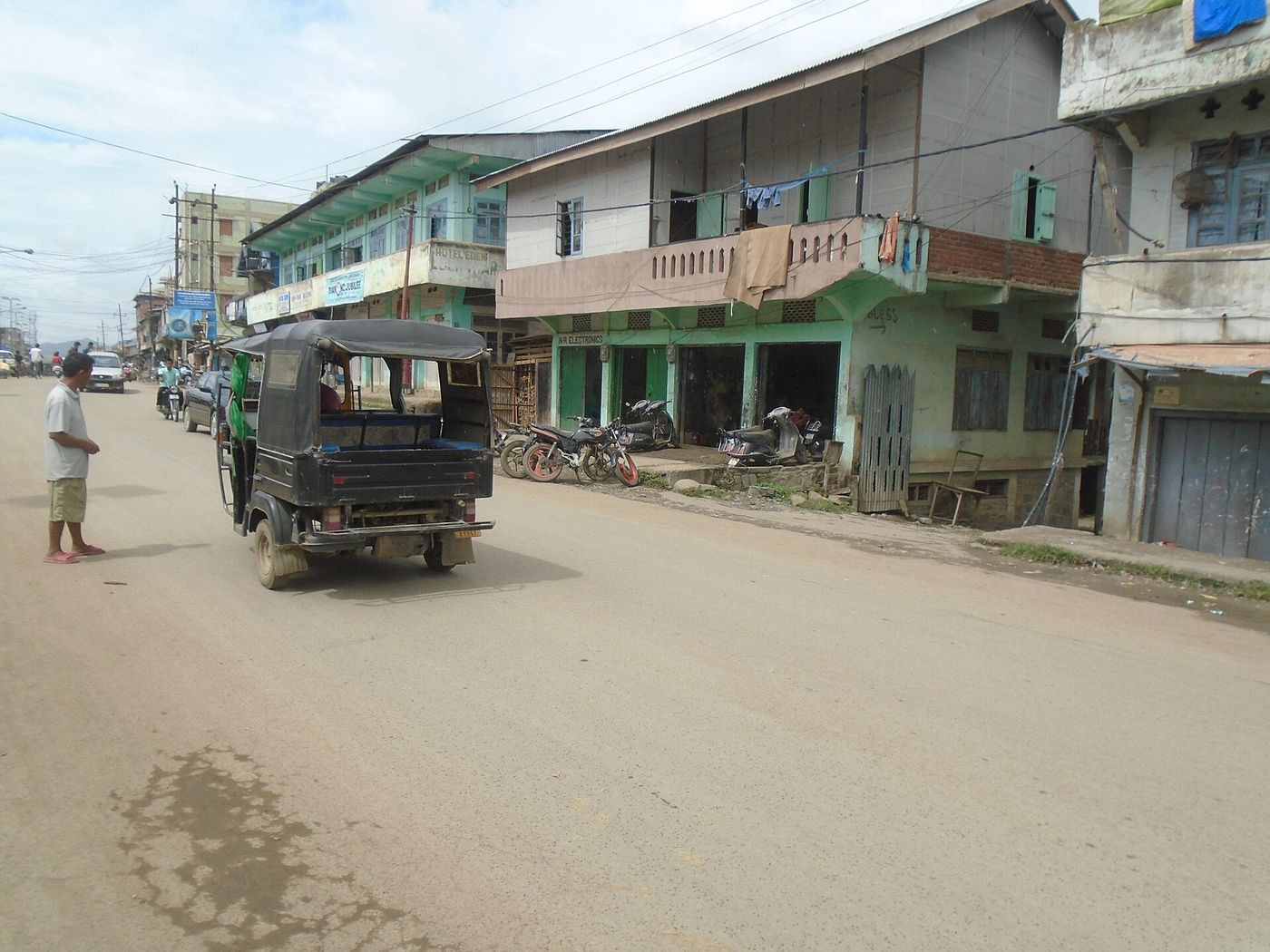
But he did not stay silent, and the rest of the picture matters. He spoke publicly on 20 July 2023, the day after the video went viral. On 10 August he answered the opposition's no-confidence motion for 133 minutes, the longest reply a prime minister has given to one, and spent only about three of those minutes on Manipur, first saying the word 93 minutes in. That's a fair hit. In those three minutes he said that crimes against women are unacceptable and that a solution would be found; by then the opposition had walked out. The motion was defeated by voice vote.
The argument I find most persuasive on timing comes from Biren Singh, who pointed out that Narasimha Rao and I.K. Gujral did not go to Manipur during the earlier conflicts either. He made that point to Jairam Ramesh. My own view goes a step further. A prime minister landing in the state in the first month would have turned a law-and-order emergency into a security operation of its own. The Home Minister went within four weeks, and I think that was the correct level.
When he finally went, the day took in both sides of the divide. In Churachandpur he laid foundation stones for projects worth over Rs 7,300 crore and met displaced families. In Imphal the projects were worth over Rs 1,200 crore. Nine days earlier the Suspension of Operations pact had been renewed. The Kuki-Zo Council welcomed the visit. The United Naga Council had a trade embargo going on key highways, and Meitei insurgent groups called a shutdown for the day. So a day that was meant to reach every community drew objections from some of them, which doesn't surprise me. Deccan Herald and The Week reported on it.
Six days later, on 19 September, gunmen ambushed a 33 Assam Rifles column on NH-2 at Nambol Sabal Leikai. Two soldiers died and five were wounded. No group claimed it. I couldn't find a report of anyone being charged, and I'd rather say so than leave it out.
Act XI Everyone blames the Centre
On 4 February 2026 the Ministry of Home Affairs revoked President's Rule and Yumnam Khemchand Singh was sworn in at Lok Bhavan in Imphal, with Governor Ajay Kumar Bhalla administering the oath. His cabinet was built with a point to make. Nemcha Kipgen, a Kuki-Zo BJP member, became one deputy chief minister, and Losii Dikho of the Naga People's Front became the other. The BJP holds 37 of the 60 seats, with the NPF and JD(U) behind it. All India Radio carried the notification.
That arrangement tells you something about how the three communities see the Centre. Newslaundry, which is not an admirer of the government, wrote in April 2026 that trust in the new government "remains low on all sides". Meiteis blame it for failing to protect the valley against attacks despite buffer zones manned by central forces. Nagas allege that the central and state governments and the central security forces have emboldened the Kuki-Zo community. The Kuki-Zo side had its own complaint the September before: the signatory groups said the Press Information Bureau had spun the Suspension of Operations pact, and they have kept asking for an independent investigation and a separate administration. Newslaundry's piece is worth reading in full.
I take that as the best argument for the government's neutrality. When the Meiteis, the Nagas and the Kukis each say the Centre is siding with someone else, either all three are wrong or the Centre is doing what a central government is supposed to do when a state has three parties who each want the others disarmed first. The alternative to that position isn't a better settlement. It's partition by default, and the Kuki-Zo demand for a Union Territory with its own legislature, which has to be answered one way or the other. Khemchand Singh's answer was that Manipur is home to 36 communities and the state will remain intact. I think that's right. A map redrawn by violence doesn't produce a settlement; it produces the next map.
What each side would say to me
A Kuki-Zo reader would say the forest orders and evictions started this, that the 4 May video sat unanswered for eleven weeks, and that central forces held buffer zones around the valley while villages burned in the hills. They would point out that the Army itself called the Khamenlok attackers a mob. They would say, as the Kuki-Zo Women's Forum did in October, that this is a political crisis and no longer a security one, and that the answer is a separate administration, not more patrols.
A Meitei reader would say the valley is ringed by armed groups, that drones and rockets from the hills are hitting homes in Moirang and Bishnupur, and that unchecked migration from Myanmar is changing the hills. They would remind me that Meitei insurgent groups called a shutdown on the Prime Minister's visit, and that the Centre is still too slow in taking back weapons. Their civil society coordination body, COCOMI, called Kuki fighters "narco-terrorists" during the Khamenlok fighting, which tells you how far apart the language is.
A Naga reader would say the Nagas stayed out of the Meitei-Kuki war for three years, were drawn in once the fighting reached their hills, and allege that the Centre and the state have emboldened the Kuki-Zo side. The United Naga Council ran a trade embargo on key highways in September 2025 and said in October 2026 that security forces had left Naga villages unprotected.
I take all three as sincere. My answer is the same to each. The one body that all three need in the room, and none can replace, is the Union government. Delhi's mistakes were of speed and sequence. The alternatives each group proposes would be mistakes of kind.
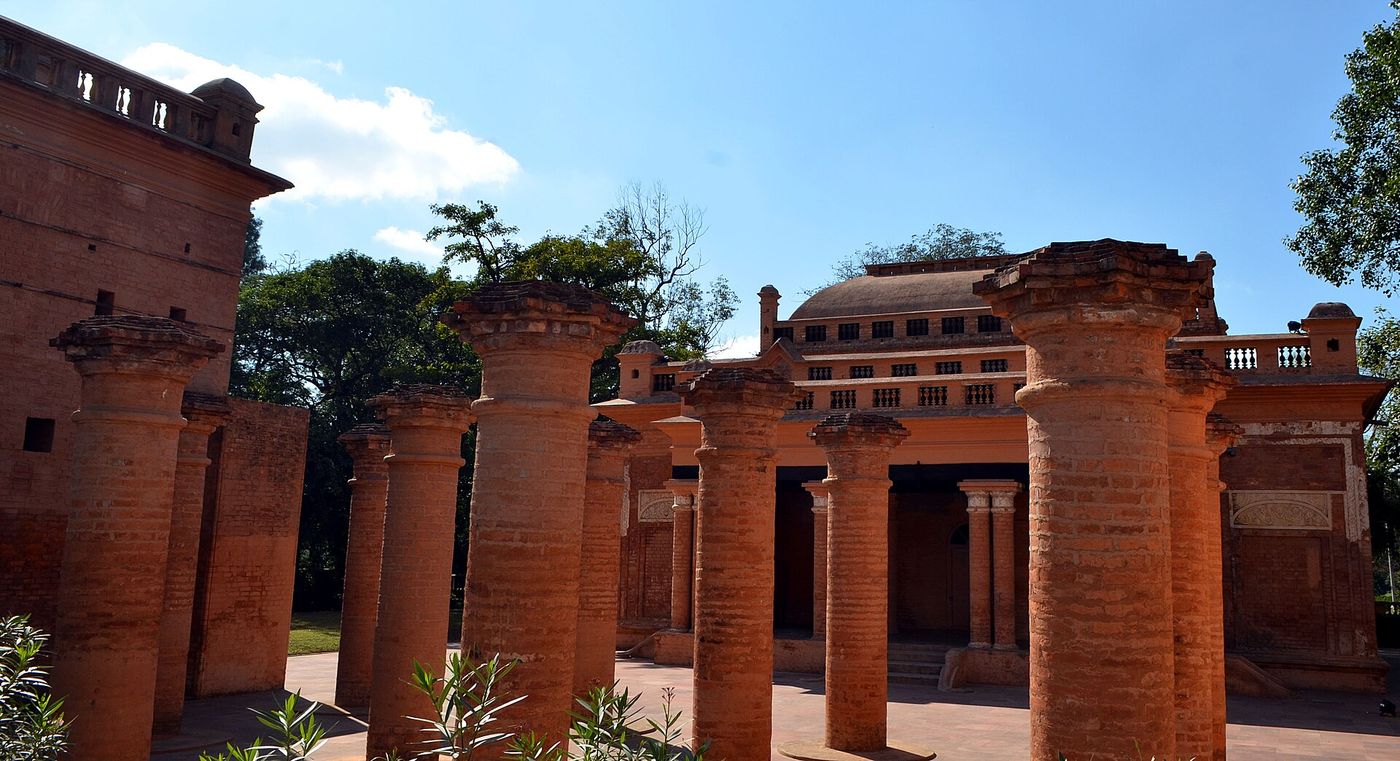
Act XII The front that moved
What came after President's Rule is the strongest evidence for the argument that this isn't a BJP story. The Meitei-Kuki line got quieter. A different one opened. On 7 February, three days after the new government was sworn in, a Tangkhul Naga man was allegedly assaulted at Litan, in Ukhrul district, and stone-throwing between the two communities turned to arson the next night. About 25 houses burned. Vungzagin Valte, the Kuki BJP legislator who had been beaten by a mob in Imphal on 4 May 2023, died on 20 February of complications from the injuries. A curfew was declared and the internet in Ukhrul was suspended for five days. The Nagas had mostly stayed out of the conflict since 2023. Now Nagas and Kukis were fighting each other, and the Meiteis were not in the room.
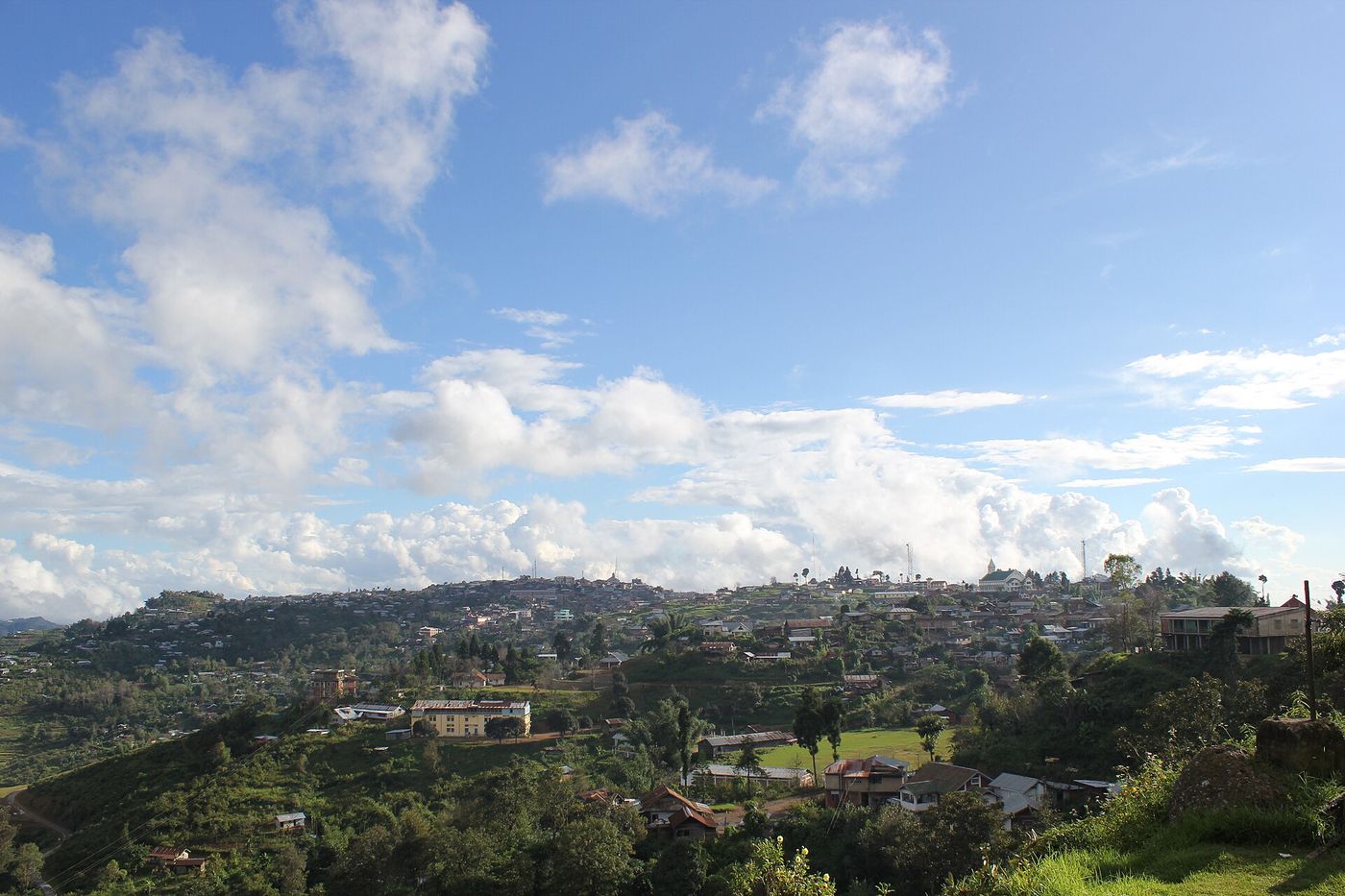
Violence did not leave the valley either. On 7 April an explosive attack at Tronglaobi Awang Leikai in Bishnupur district killed two children and critically wounded their mother. Internet services were suspended in five districts and protests ran for weeks. Sources disagree on whether it was a bomb or a rocket; none disagrees that the children died.
In the hills it got worse. Two Naga civilians were killed in an ambush on 18 April, which the United Naga Council answered with a three-day shutdown. On 21 April, Naga and Kuki-Zo groups clashed in Kangpokpi when some Kuki youths tried to lift a road blockade. On 24 April a gunfight in Ukhrul killed three and injured four, with each side blaming the other, and Newslaundry counted seven people from both tribes killed in the previous month. By May, hostages were being taken: the state home minister said more than 38 Kuki and Naga villagers were being held by different groups, and 31 were later released.
On the Meitei-Kuki question, Khemchand Singh did something his predecessor hadn't. In March he held the first direct talks in three years with Kuki-Zo representatives, in Guwahati. No agreement came out of them. He called it a first step towards bridging the trust deficit. Talks between the Home Ministry and the SoO groups stalled over reopening NH-2 and NH-37. I'd put it plainly: the talking has restarted and it hasn't produced anything yet.
On 3 September the Home Minister, Govindas Konthoujam, answered a question from a BJP MLA, Sapam Ranjan Singh, and gave the assembly the figures: 306 dead, 49 missing, 11 of the dead security personnel. They were not broken down by community. "The dead and missing belong to various communities," he said, "including Meiteis, Kukis, and Nagas." A government that was only guarding one community's interests wouldn't have said so.
The latest numbers are the hardest. On the night of 9 October a 42-year-old Kuki woman was killed in Chassad village in Kamjong district, and tit-for-tat arson spread across Kamjong, Ukhrul and Kangpokpi. By the morning of the 10th security sources counted at least nine dead, including a 22-year-old Kuki man, two Naga village volunteers, at least four Naga civilians in firing between security forces and suspected militants in Kangpokpi, and a Nepali man shot in his vehicle in Ukhrul. More than a dozen houses were burned. The Kuki Inpi blamed the NSCN-IM, and accused the state forces of colluding with it; the United Naga Council said security forces had left Naga villages unprotected. The Chief Minister was in Delhi with the Prime Minister and the Home Minister. ThePrint has the details.
On 21 October the Kuki-Zo Women's Forum held a press conference in Delhi. It asked for President's Rule to be reimposed and for a Union Territory with a legislature for the Kuki-Zo people, said it does not want to leave India, and claimed 32 Kuki-Zo people had been killed since the new government took office. I can't verify that number, and it isn't an official one. It is the opposing case in its own words, and it deserves a hearing for that reason.
Act XIII The numbers, and why they differ
The death toll in Manipur is quoted in half a dozen versions. Here are the ones I could source, in order, with who said it.
| Date | Dead | Said by | Alongside it |
|---|---|---|---|
| 14 May 2023 | 73 | State tally | 243 injured, 1,809 houses burned, 46,145 evacuated, 26,358 in 178 relief camps |
| 14 Sep 2023 | 175 | Police | 4,786 houses burned, more than 1,100 injured |
| 29 Feb 2024 | 219 | The Governor | About 10,000 FIRs |
| 22 Nov 2024 | 258 | Official figures | Reported after the Jiribam killings |
| Jun 2025 | About 260 | Officials | One protest-related death in the first months of President's Rule |
| 30 Mar 2026 | n/a | RTI reply | 58,881 displaced since 3 May 2023; 174 relief camps open on 10 March |
| 31 Aug 2026 | 306, plus 49 missing | State Home Minister, in the assembly | 11 security personnel among the dead |
Sources are on the map entries and in the notes at the end.
These come from different offices with different definitions, and they cover different stretches of the conflict, so the jumps between rows are not all new deaths. The 306 includes the Naga-Kuki killings of 2026, which the 260 of the middle of 2025 could not. I treat each number as a floor. If you take one thing from the table, take the last row's wording. The Home Minister said the dead and missing belong to several communities, which is the thing every one-sided telling of this conflict leaves out.
Act XIV What I won't defend
Any honest case for this government has to list what it can't answer. My list is below, and the government should have it on a wall.
- The armouries. About 6,000 weapons left police stores in 2023, a quarter were back by October, and about a thousand are still missing. A state that can't keep its guns can't promise anyone a ceasefire.
- The eleven weeks between the 4 May assault and the first arrests, all of which followed the video going viral rather than preceding it.
- Twenty-one months with the same chief minister. He apologised on 31 December 2024 and resigned six weeks later.
- The two seats. The BJP lost both Manipur Lok Sabha seats in 2024. The voters had weighed the record and passed judgment on it.
- The Lamba Commission, formed in June 2023, which I couldn't find a report from three years on.
- The 864 days, with the caveat above.
- The drones and rockets of September 2024, which the valley had no answer to until anti-drone systems went up afterwards.
These are real, and I don't think a serious defence of the government can wave them away. My case is that they are failures of execution inside a response that, taken as a whole, was the right one. The Centre sent forces in the first day, stood up the investigations within weeks, put the state under President's Rule when the state government's credibility was gone, got a ceasefire deal that moves the signatories' weapons into central-force camps, and restored an elected government with a cabinet that included both of the other hill communities. Compare that with the alternatives people proposed. Doing nothing would have been worse. Letting each community police its own territory would have been worse. A redrawn map would have been worse, and it still would be.
Act XV What to watch next
The first thing to watch is arms. The weapons still out there are the difference between a bad year and a bad decade, and the recovery numbers for the next quarter will tell you more than any speech. The second is the Suspension of Operations pact, which ran for a year from early September 2025. Whether it was renewed, and on what terms, is the best indicator of whether the Kuki groups still believe in the process. The third is the highway. Free movement on NH-2 and NH-37 has been ordered, contested and half delivered. When a Kuki truck and a Meitei truck pass each other at Kangpokpi without a convoy, that's progress.
The fourth is the Naga-Kuki front, which is now where the people are dying. It has its own history from the 1990s, its own militias and its own leaders, and the state government, with a Naga and a Kuki deputy chief minister, is the only structure in which both can be in a room. The fifth is the calendar. The assembly's five-year term runs out in early 2027. A state that still had 174 relief camps open in March will face voters within months, and the party that governs it will have to say what it did.
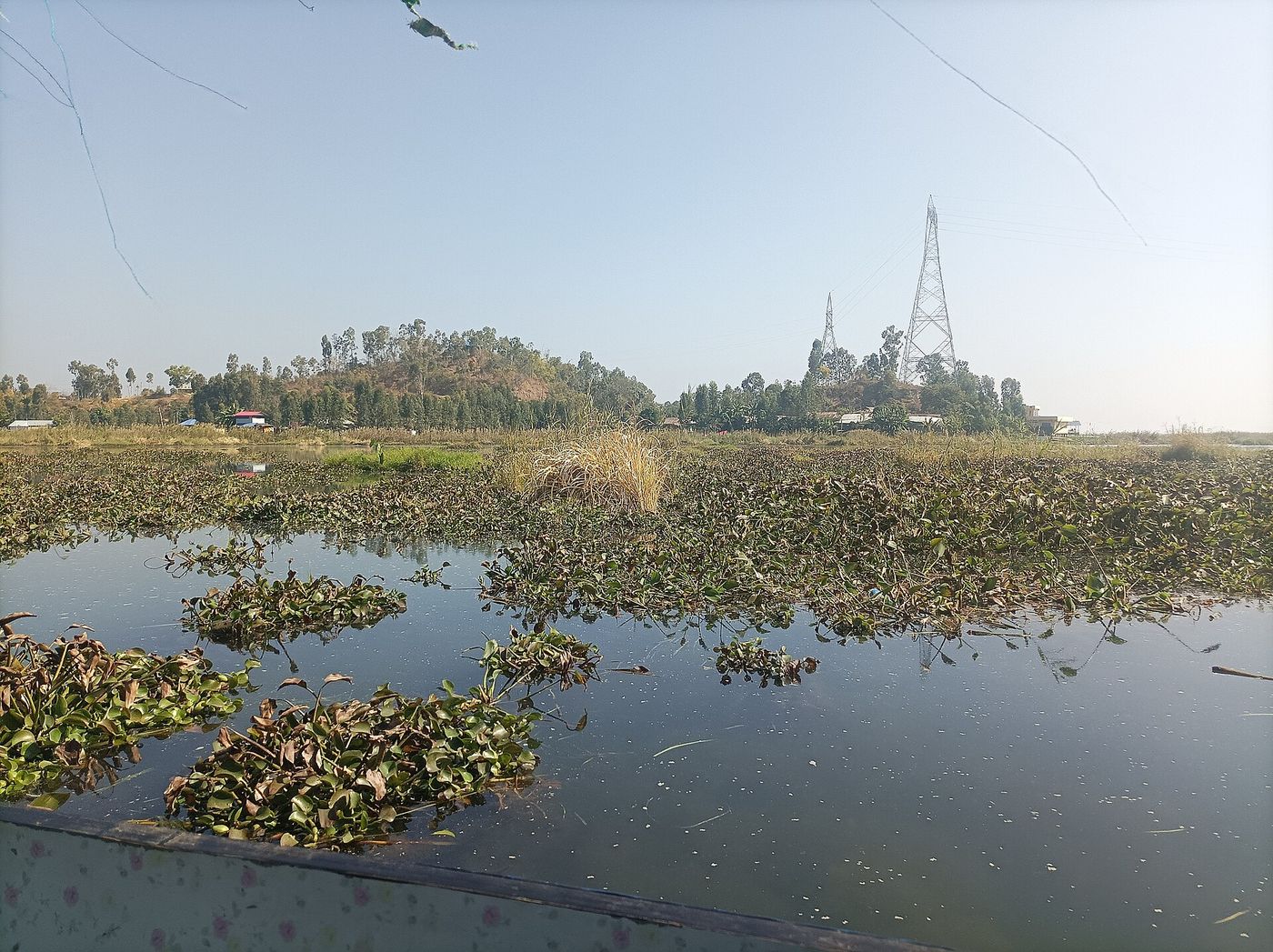
Where I end up is this. The story most people have heard is that a party grabbed power, lit a fuse and watched a state burn. The record I've laid out says something less dramatic and, to me, more convincing: a fuse that was laid decades ago, a spark that came from a court and a rally, a state government that lost the trust of half its people, a Centre that stepped in, fixed what it could and was slow on the rest, and a political process that is still unfinished and still losing people at its edges. The state's count stood at 306 dead and 49 missing on 31 August. By security sources' count at least nine more people died in the hills on 9 and 10 October.
A short glossary
- SoO
Suspension of Operations. A pact between the Centre, the state and Kuki armed groups under which the groups stay in designated camps and security forces do not run operations against them.
- KNO and UPF
The Kuki National Organisation and the United People's Front, the two umbrella bodies of Kuki armed groups that signed the renegotiated SoO in September 2025.
- FMR
The Free Movement Regime. It let people living within 16 km of the India-Myanmar border cross it on a one-year pass. The Home Ministry moved to end it in February 2024.
- ATSUM
The All Tribal Students' Union Manipur, which called the 3 May 2023 Tribal Solidarity March.
- UNC
The United Naga Council, the Naga apex body in Manipur.
- NSCN-IM
The National Socialist Council of Nagalim (Isak-Muivah), the Naga armed group whose "Nagalim" idea overlaps parts of Manipur.
- COCOMI
The Coordination Committee on Manipur Integrity, a Meitei civil society body.
- Arambai Tenggol
A Meitei militia that announced its dissolution on 26 May 2023.
- IRB
The India Reserve Battalion, a state armed police unit. IRB personnel are attached to the Manipur Police commandos.
About the images and sources
This is an argument, so the facts under it matter more than the voice. Figures that sources disagree on are marked as such: the death toll (175, 219, 258, 260 and 306 are each official figures from different offices on different dates), the Lilong toll (four or five), the Koutruk toll (one or two), the Meitei share of the population (44 to 65 percent depending on whether Meitei Pangals are counted and whose table you use) and the attackers at several sites. Pins on the map sit on the nearest town, and where several events share a town they fan out in a small ring. The district boundaries are from the 16-district Manipur file in the open india-maps-data project; neighbouring states are from Natural Earth's India edition. Charts and the timeline are my own work. Photos are from Wikimedia Commons under the licences credited in each caption; I couldn't find freely licensed photographs of the violence itself, so I haven't used any. The reporting draws on:
- Wikipedia: the 2023 to 2026 Manipur conflict, used for the dated chronology of 2023 and the 2026 events, and checked against the reports linked in each map entry
- Wikipedia: Khamenlok clash
- NEWire: the state's toll of 306 dead and 49 missing
- ThePrint: the October 2026 Naga-Kuki clashes
- Newslaundry: Naga-Kuki tensions and the new government and the Ukhrul follow-up
- All India Radio: President's Rule revoked
- The Week (PTI): violence drops under President's Rule
- Deccan Herald: 328 weapons recovered in valley districts
- Tribune: the renewed Suspension of Operations pact and Organiser on its terms
- All India Radio: the 8 March 2025 free-movement order and The Wire on the Kuki-Zo Council's reply
- NE Now: relief camp and rehabilitation funding
- Borderlens: Shah's announcements in Imphal
- The Week: extension of the Lamba Commission
- The Week: the High Court revokes its Meitei ST paragraph
- Business Today: Shah on fencing the Myanmar border and Morung Express: the Free Movement Regime decision
- Al Jazeera: the September 2024 flare-up and Outlook on drones and rockets
- The Wire: Jiribam, November 2024 and Human Rights Watch
- The Wire: the 864 days, The South First on the 133-minute reply and Scroll on the 31 December apology
- Wikipedia: the Kuki-Naga conflict, the 1993 Pangal massacre and the 2001 uprising
- ETV Bharat: the Kuki-Zo Women's Forum, 21 October 2026